Advancing global safety standards through rigorous technical evaluation and innovative fire engineering solutions for the world’s most demanding industries.
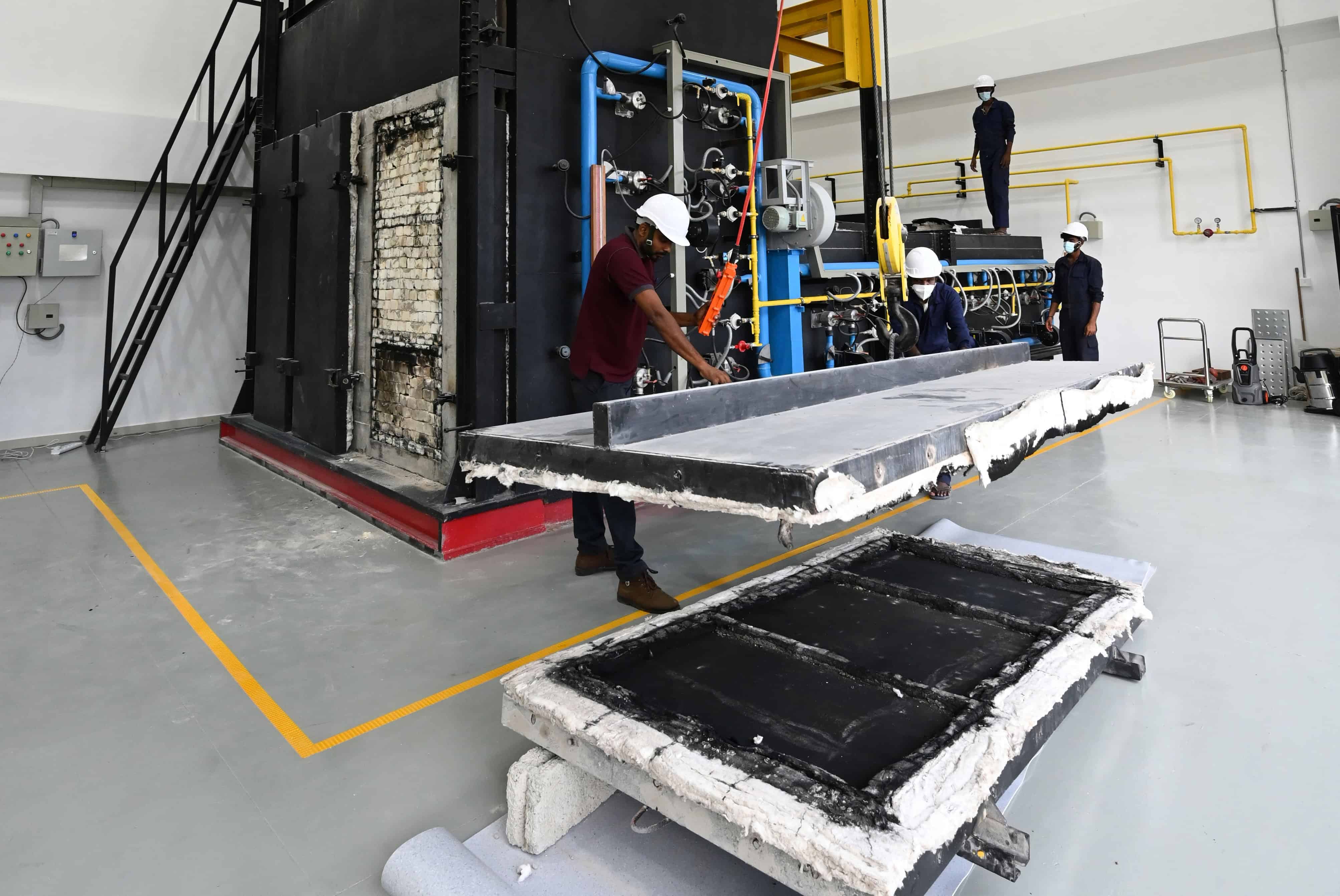
The Actual Scale Furnace at the CFSE is a robust facility designed for conducting comprehensive fire resistance tests on construction elements with the capability of both load bearing and non-load bearing fire tests. This furnace is capable of simulating actual fire conditions to assess the structural performance and safety of building components.
The full-scale fire testing includes
Testing Standards
Testing complies to ASTM, BS EN, and ISO standards
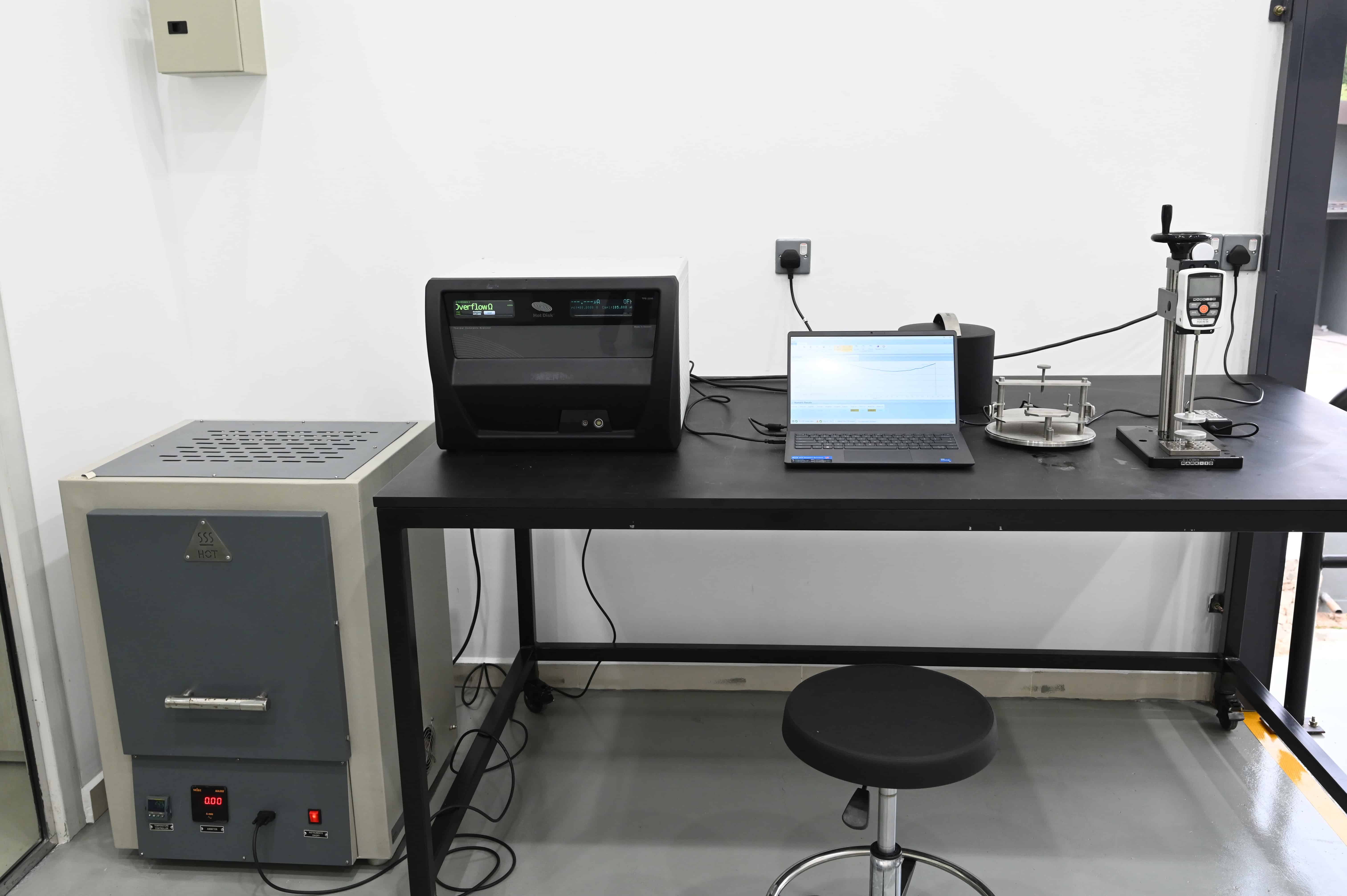
The Elevated Temperature Thermal Conductivity Measuring Apparatus is designed to evaluate the thermal properties of materials under elevated temperatures, up to 750°C. This apparatus is essential for determining how materials conduct heat when exposed to high temperatures, providing valuable insights into their thermal behavior in fire conditions. The apparatus is capable of testing a wide range of materials, including solids, pastes, liquids, and thin films.
Testing Parameters
Testing Standards
Complies with ASTM and ISO standards
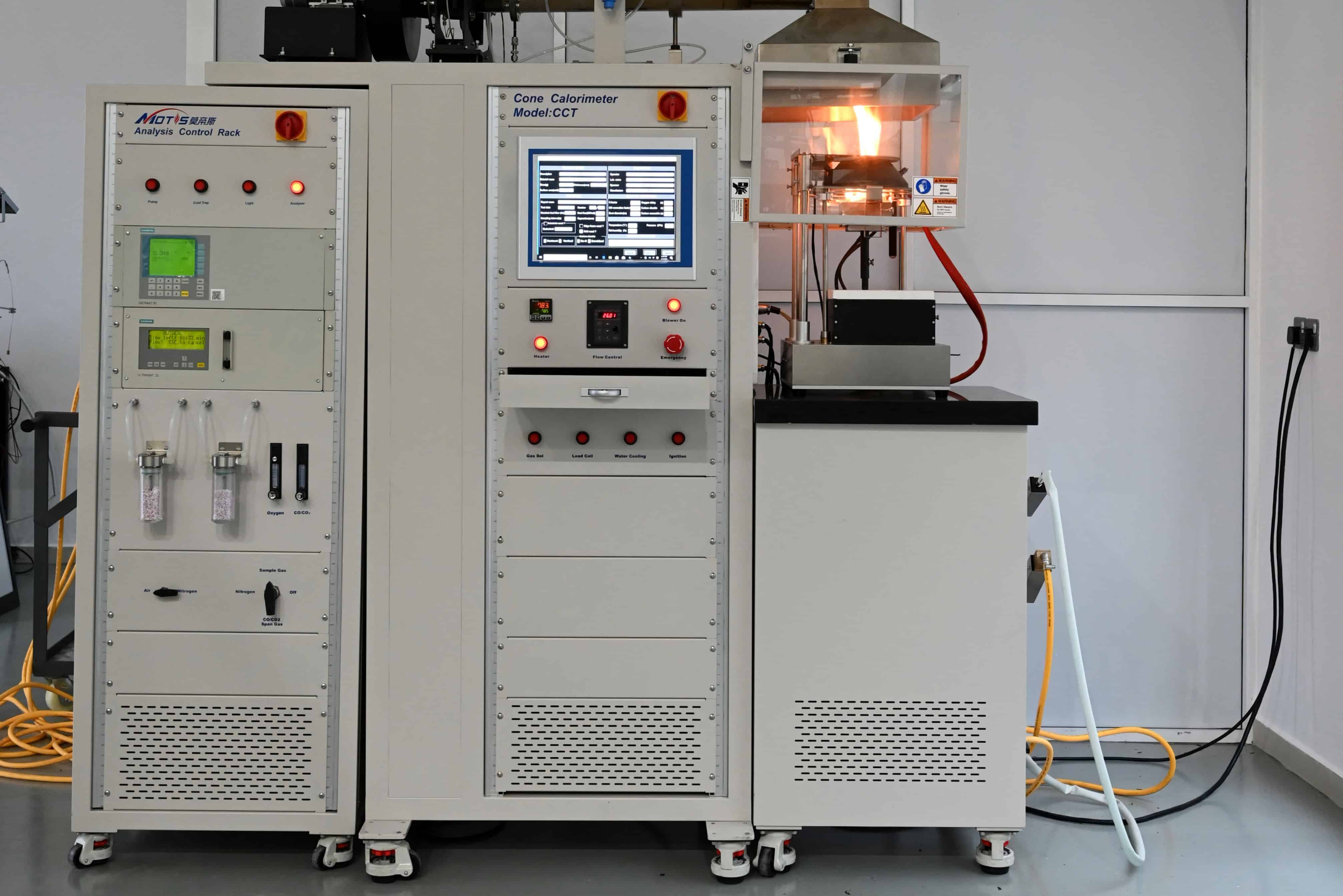
The Cone Calorimeter is an advanced apparatus that evaluates how materials ignite and burn under controlled heat flux. It assesses the fire performance of building materials by measuring key parameters such as Ignition Time, Heat Release rate, Mass Loss, and other properties relevant to fire characteristics. These metrics are crucial for understanding how materials behave when exposed to fire, providing essential data for fire safety analysis and material development.
Testing Parameters
Testing Standards
Complies with ASTM, BS EN, and ISO standards
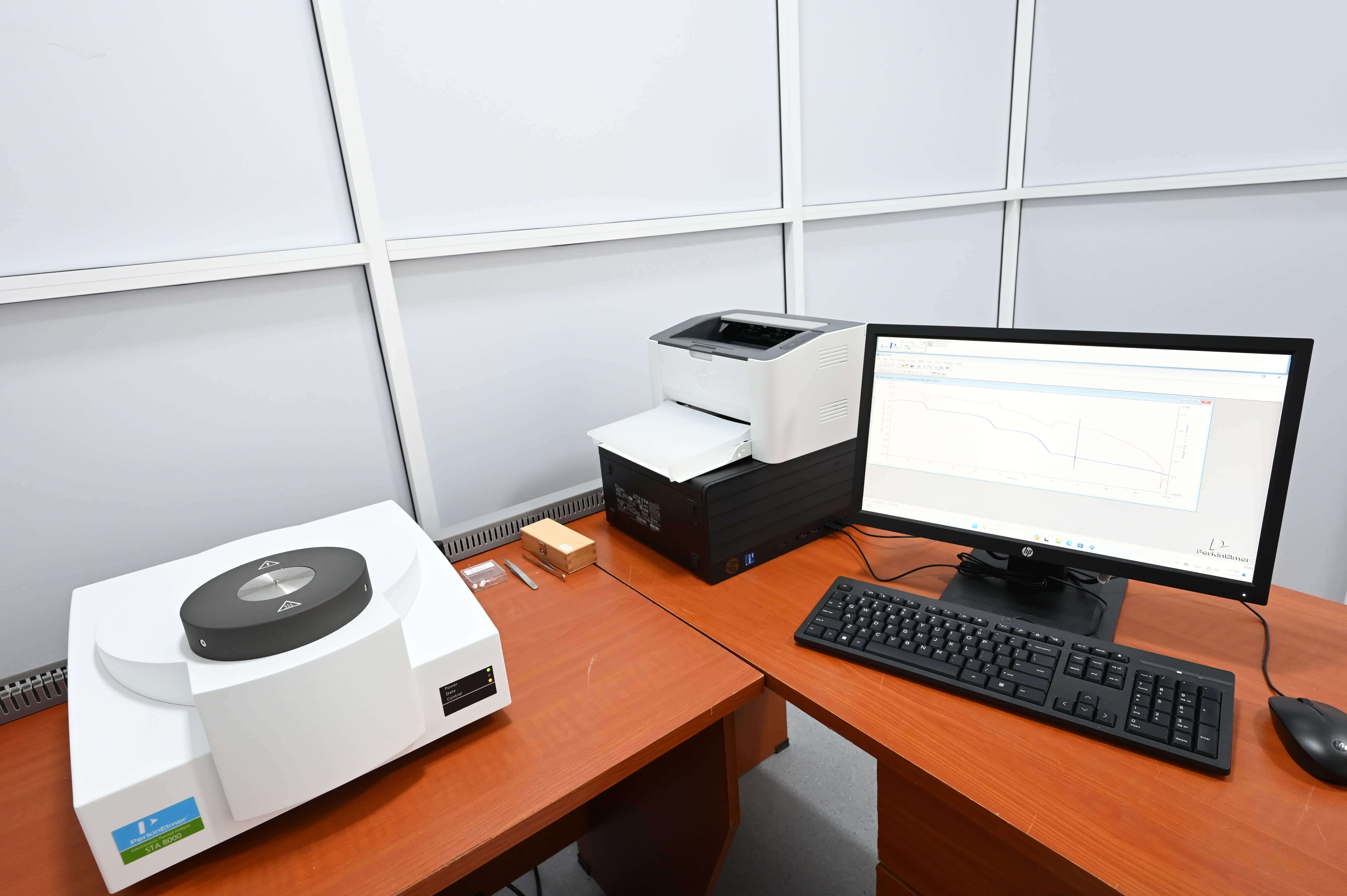
The Simultaneous Thermal Analyzer is a state-of-the-art instrument for investigating the thermal behavior of materials at temperatures up to 1200°C, with heating rates from 1 to 100K/min. It simultaneously measures mass changes such as decomposition, oxidation, or moisture loss and heat flow events, including melting, crystallization, glass transitions, and chemical reactions. By collecting these data under controlled and identical temperature, atmosphere, and sample conditions, the STA provides precise, directly correlated information on material responses to thermal stimuli. This versatile instrument can analyze a wide range of materials, including concrete, mortar and masonry, steel and metals, ceramics, and advanced construction materials, delivering critical insights for material selection, development, and fire safety applications.
Testing Parameters
Testing Standards
Complies with ASTM, BS EN, and ISO standards
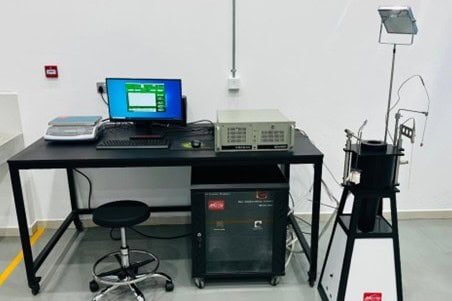
The Non-Combustibility Apparatus is designed to determine the combustibility of materials under controlled laboratory conditions. It assesses whether materials ignite or sustain combustion when exposed to high temperatures, providing essential data for evaluating their potential contribution to fire development and for compliance with international fire safety standards used in non-combustibility classification.
Testing Parameters
Testing Standards
Complies with ASTM, BS EN, and ISO standards
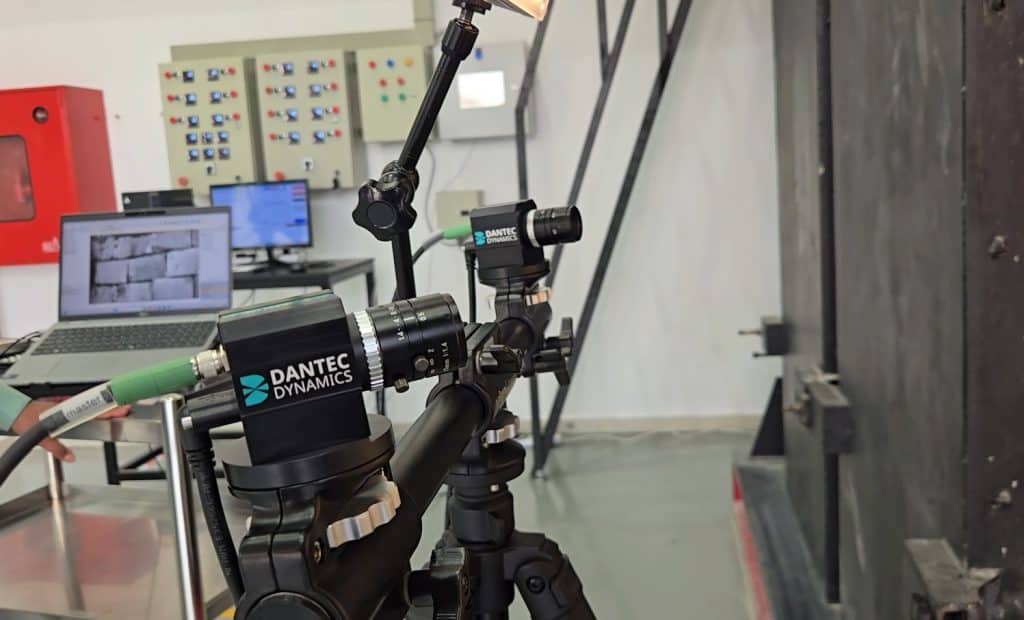
The Displacement and Deformation Measurement Camera used to obtain real time non-contacting strain measurement (both axial and transverse measurement) of building elements in ambient and elevated temperature. This advanced system uses optical techniques to capture and analyse the movement and distortion of materials under stress, providing accurate and real-time data on the material’s response to external forces or thermal changes.
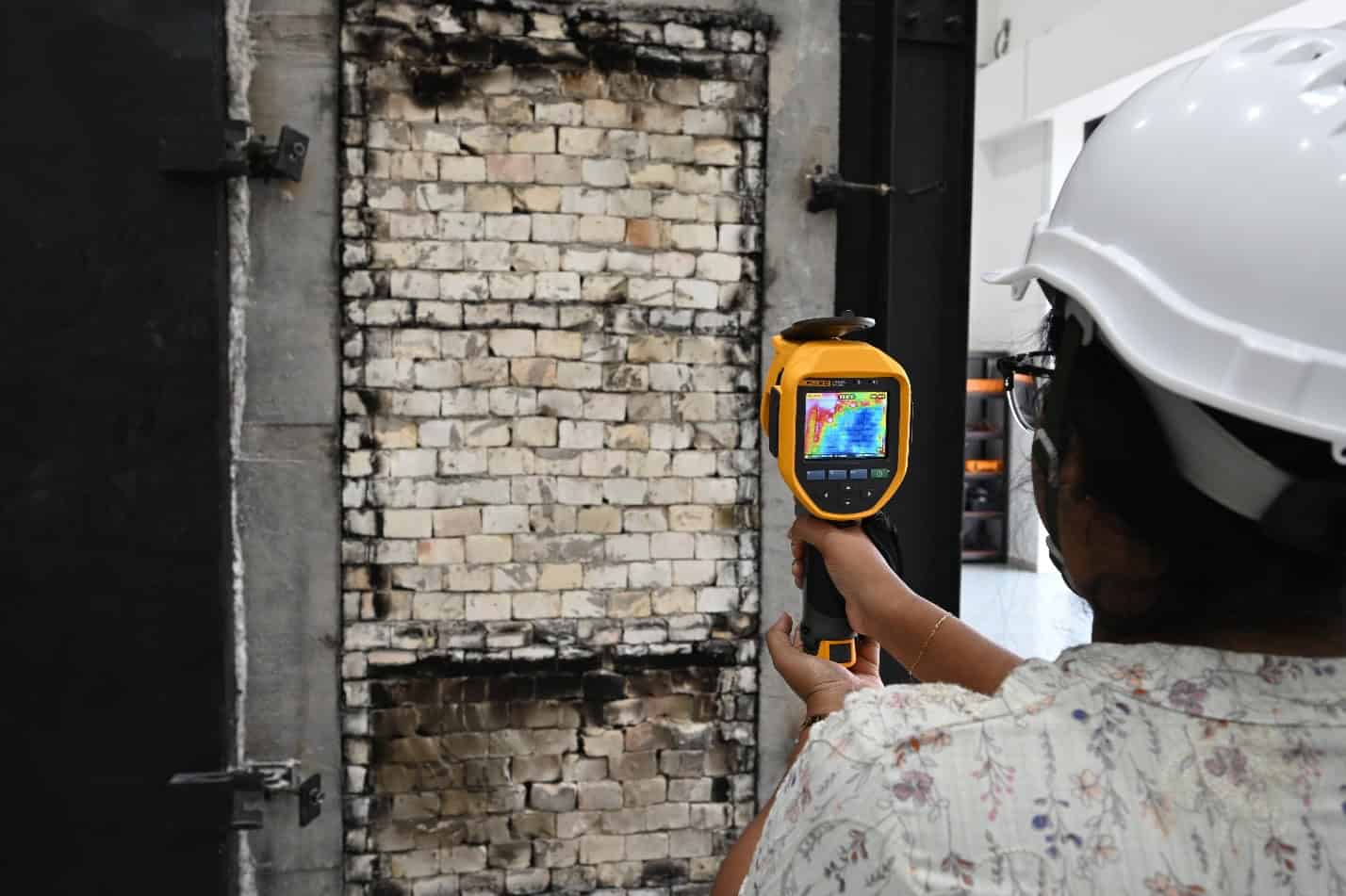
The Thermal Imaging Camera is a non-contact infrared system used to capture surface temperature distributions during fire testing and other high-temperature assessments. By detecting infrared radiation emitted from material surfaces, it provides high resolution thermal images for full-field temperature analysis without physical contact.
The system is used to measure surface temperatures, identify localized hotspots associated with thermal concentration or damage initiation, and monitor temperature evolution over time during heating and cooling. Compared to contact-based sensors, thermal imaging enables rapid data acquisition, simultaneous monitoring of multiple areas, and clear visualization of temperature patterns
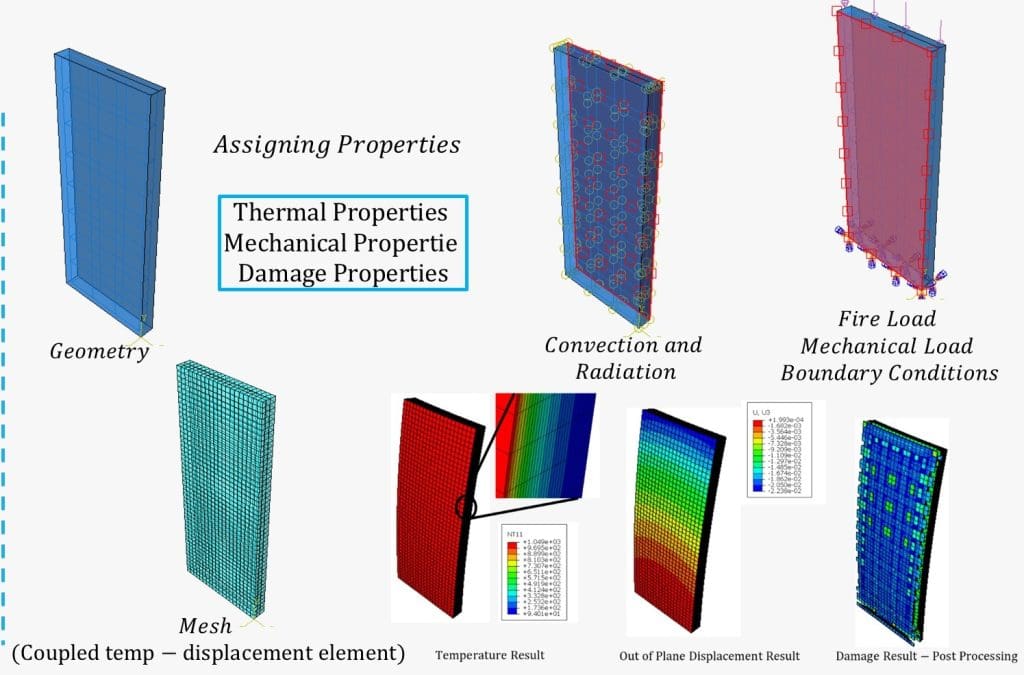
The Centre for Fire Safety Engineering (CFSE) employs advanced Finite Element Modelling (FEM) techniques to simulate the response of structures and materials exposed to fire. This capability enables detailed evaluation of thermal behavior, mechanical stresses, deformation, and potential failure mechanisms under elevated temperature conditions, complementing experimental testing and reducing reliance on physical fire tests alone. FEM provides a powerful platform for understanding complex fire–structure interactions and for assessing performance under a wide range of fire scenarios.
CFSE’s FEM capability supports performance-based fire safety engineering, the development and optimization of fire-resistant building systems and materials, and advanced research in structural fire engineering. It allows for the comparison of multiple fire scenarios without destructive testing, optimization of fire protection systems, insulation strategies, and structural detailing, and provides technical evidence to support regulatory decision-making and building design approvals.